Two kinds of mesh, two different jobs
We stock two mesh types for this work: solar screen mesh and no-see-um screen mesh. Solar mesh is the heavier-weave option — it cuts glare and knocks down heat coming through south and west-facing openings, especially on frames that catch sun most of the day. No-see-um mesh is a much finer weave, built to stop the small biting insects that a standard screen weave lets straight through.
Which one goes in depends on the opening and what the homeowner is fighting. A porch or lanai screen that's mostly about keeping no-see-ums out gets the fine weave. A window that bakes all afternoon is often better served by the solar mesh. We'll ask before we cut anything, because once mesh is spliced into a frame, swapping weave types means doing the job twice.
Getting the new mesh to sit right
The actual rescreen comes down to tension and technique. We roll the new mesh and spline into the frame's retaining groove using a spline roller, working it in on all four sides. The fabric has to stay taut while we go — a loose rescreen sags and looks bad within a season, but overstretched mesh distorts the weave and can pull right out of the groove under normal handling.
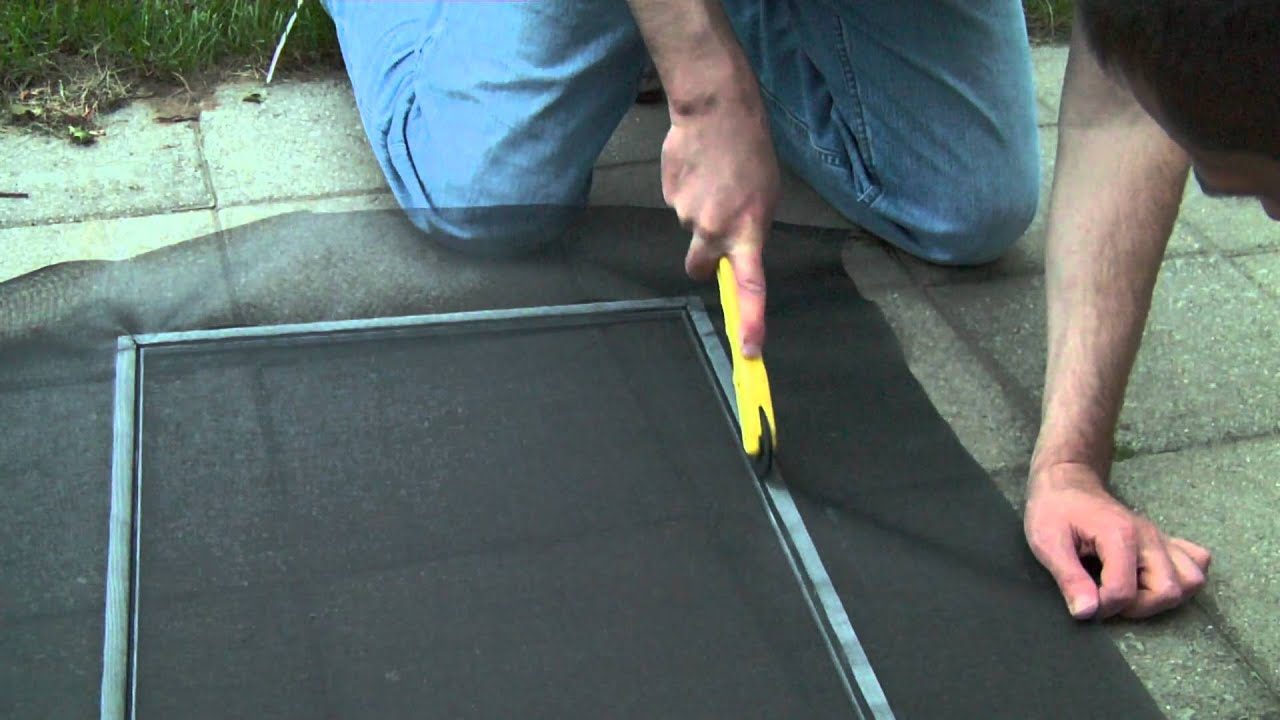
Once all four sides are seated, we trim the excess mesh with a utility knife or scissors, cutting close to the spline without nicking it. Slice into the spline line and you've weakened the exact groove that's supposed to hold the new screen in place for years, not just a season.
What a rescreen runs and why
Rescreening an existing frame runs $25 to $75 per frame. The spread comes down to mesh choice and frame condition — a standard weave on a straightforward frame lands toward the lower end, while no-see-um or solar mesh, or a frame that needs extra prep before the new screen goes in, pushes it higher.
It's priced per frame because every opening in a house can be a little different — different dimensions, different spline groove wear, sometimes a different mesh depending on which room it's in. How often a given frame needs it varies too: screens that take the brunt of a wet, humid stretch sag and weaken faster than ones that mostly sit in the sun, and rainfall here swings enough from year to year that we don't put every frame on the same schedule. We'll look at the frame and tell you where it lands before we cut anything, not after.
The Facts Behind the Number
- Free Estimates
- You pay for work, never for the quote.
- Measured, not guessed
- Numbers come from the site visit, not from a script.
How It Works
-
Reach Out
A two-minute call is enough to tell us what we're working with and what to check first.
-
Free Inspection
We come out, measure what's actually happening, and walk you through what we find.
-
Clear, Written Quote
We put the fix, the timeline, and the number on paper — take your time with it.
-
Job Done, Checked, Cleaned Up
We complete the repair, verify it solved the problem, and stand behind the work.
Some of what that looks like in the field:
- The technician reinstalls the completed screen in the window or door track and checks that it fits securely.
- For screened enclosures, the technician measures the required panels and uses walkboards or ladders rather than walking on the enclosure frame.
Related Services
- Screen Door Rescreening
- Screen Enclosure Panel Replacement
- Custom Window Screen Fabrication
- Window Screen Frame Rebuilding
- Screen Door Roller Replacement
- Screen Door Parts And Kickplate Replacement
- Pet Resistant Mesh Installation
Serving Jupiter and Nearby
Serving Jupiter, FL. Call (561) 941-9695 to confirm coverage for your address.
Fast Scheduling
Get a free quote today — call (561) 941-9695.